

Context and overall objectives of the project
The amount of steel grades micro-alloyed with titanium (Ti), vanadium (V), niobium (Nb), aluminium (Al) and boron (B) produced by European steel companies has increased in recent decades, reaching in some cases up to 95% of total steel production. Micro-alloyed steel grades present frequent problems in current production routes, related to surface and internal cracking of continuous cast semis. Significant effort has been made in recent years to improve defect rates and overall production yield. However, the problem is far from solved and the introduction of new advanced casting practices, which include higher casting speeds (to increase productivity), has led to new challenges for improving the continuous casting process for producing micro-alloyed steel grades.
Alloy elements like Boron and Sulphur are added to micro-alloy steels to increase hardenability and machinability, respectively. At the same time B and S are responsible for micro-segregation, increasing the risk of cracking at various stages during casting. Some problems related to the presence of S can be alleviated by increasing the Manganese content. However, it turns out that high Mn steels yield very low hot ductility, hence the threshold between beneficial and detrimental Mn contents is explored in this project. Boron has also a type of duality with respect to its effect on ductility. B increases hot ductility by counteracting grain boundary decohesion, however, if it is precipitated as boron nitride, BN, it has a detrimental effect on ductility. Titanium can bind nitrogen and protect B from going into boron nitride, hence decreasing risk for cracking. More Titanium in steel contributes to increased amount of carbo-nitride precipitation that decreases hot ductility, hence it is important to know the minimum necessary amount of Ti that provides appropriate protection.
The main goal of the PMAPIA project is to develop criteria for optimization of steel composition, cooling conditions and strain levels to prevent formation of crack defects in semis during continuous casting of Boron- and other micro-alloyed steel grades with varying Mn and S contents. The project is focused on three areas: industrial plant-based investigation and as-cast semis characterization, pilot plant/laboratory-based research, and numerical simulation.
Overall objectives of the project are to reduce rejection and requirements for surface re-work caused by cracking defects of continuously cast semis. This will be achieved by investigating interactions between alloying elements and their effects on micro-segregation and precipitation processes affecting hot ductility during continuous casting. By performing in-field experimental casting the process practices will be optimized to further prevent cracking of semis.
Images
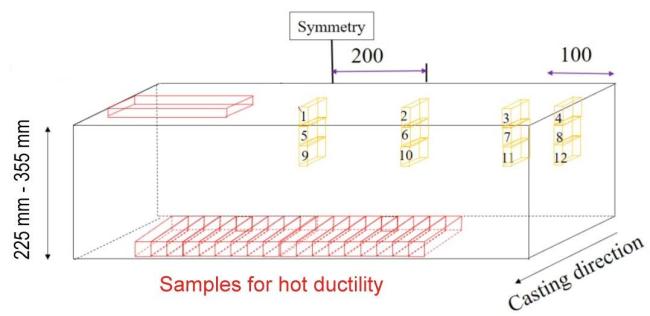
Figure 1. Samples representing slab section. (VASL)
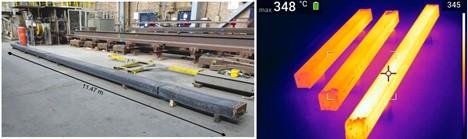
Figure 2. Mini-slab in the pilot plant. (MPI UK)
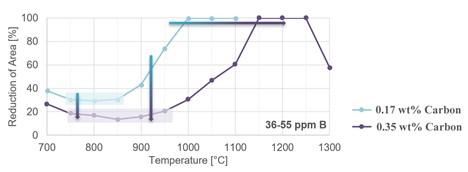
Figure 3. The effect of Carbon contents on hot ductility in alloys containing Boron. (RWTH)
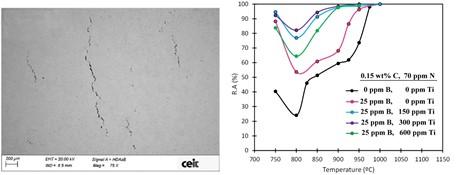
Figure 4. Off-corner cracks and the effect of Boron and Titanium on hot ductility. (CEIT)
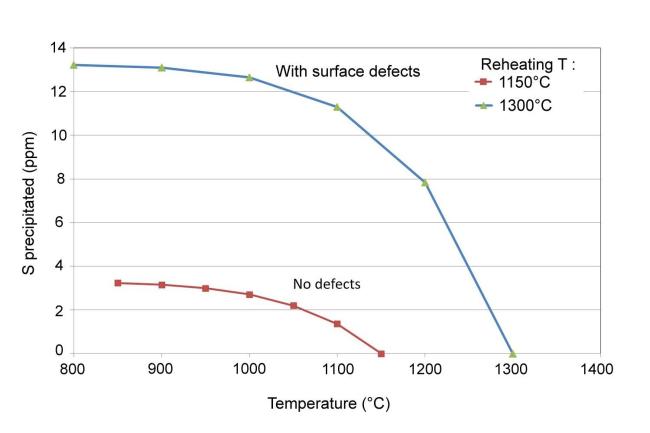
Figure 5. The effect of Sulphur on hot rolled bars surface defects. (Sidenor)
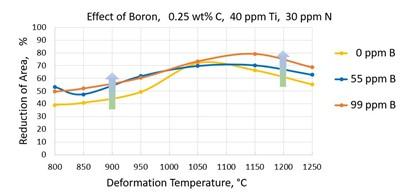
Figure 6. The effect of increasing Boron contents in a high C, low Ti composition. (Swerim)